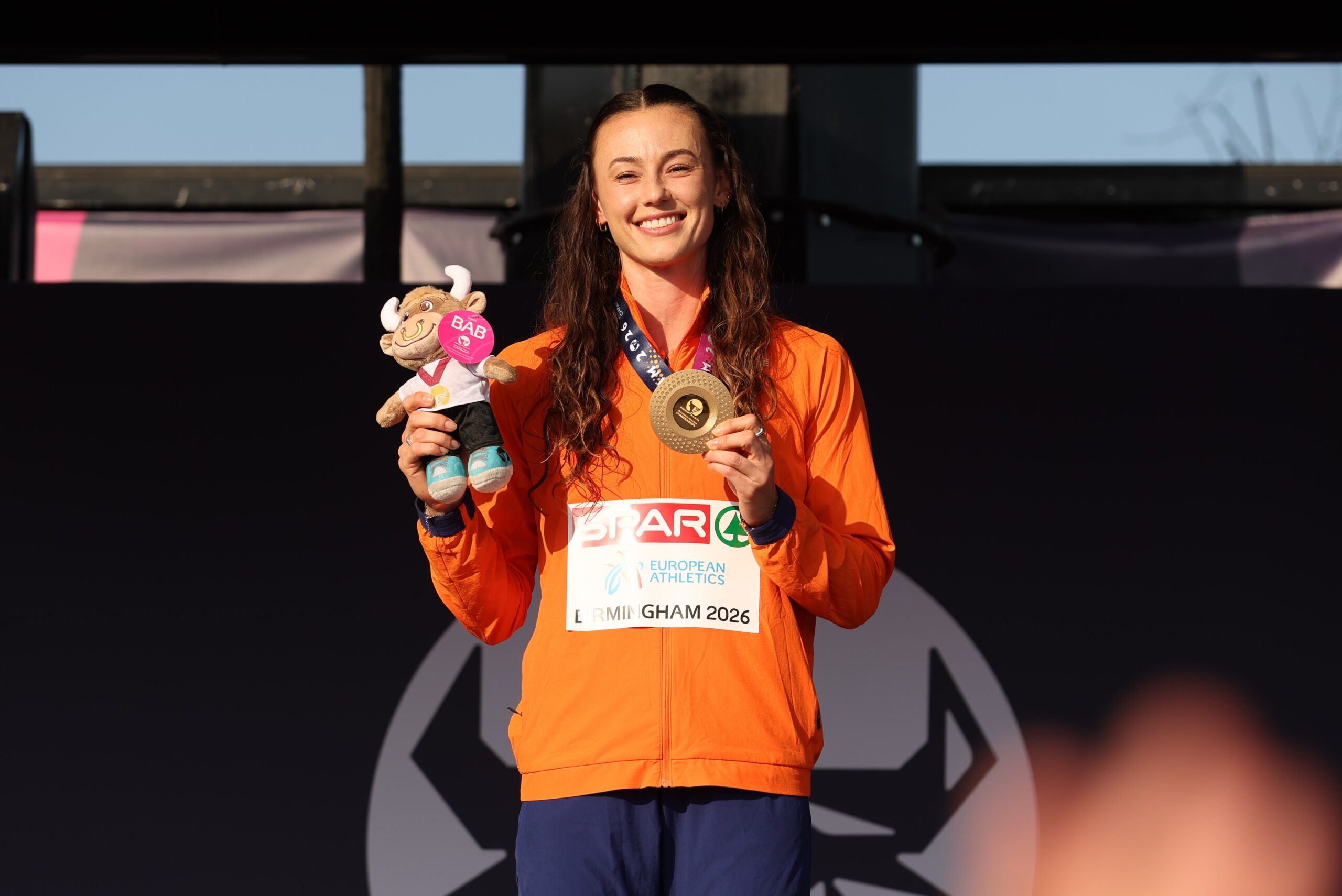
Some races are closer than others and, this year, one was the closest of them all. Just 0.001 seconds separated gold and silver in the women’s 100m hurdles at the European Championships in August. The photo finish went in favour of Nadine Visser, who was rewarded with a maiden medal that had proved elusive over many seasons prior. After perhaps the best season of her career (so far), James Rhodes sat down with Nadine Visser to talk about that race in – and a return to – Birmingham, the successes and challenges of the season, and much more.
Some races are closer than others. This year, one race was the closest of them all. A not-so-warm Tuesday evening at Birmingham’s Alexander Stadium. The middle of August and the second day of the European Championships. The final of the women’s 100m hurdles.
To fully appreciate the story, one has to rewind eight years to a definitely-not-warm March evening in the same city. A couple of miles from the Alexander Stadium, the 2018 World Indoor Championships provided Nadine Visser with as close to a perfect racing evening as one can get (and frostbite for anyone alongside the snow-covered canals outside). A 29-year-old Dutch Record broken in the semi-final, and a bronze medal won in the final – a first indoor medal.
If any question marks lingered over transitioning from heptathlete to full-time hurdler, they were likely erased that night. It was the correct decision. Two Olympic, two World and three European Championship final appearances came in the seven years that followed. However, one thing proved elusive. That first (senior, individual) medal outdoors.
Surely fate would insist that a return to Birmingham, undefeated and quickest in Europe all season, would deliver that first medal? If only it was that easy.
Success Indoors
The year started well indoors. Five competitions over 60m hurdles, topped by winning silver at the World Indoor Championships. Back on the world podium. Perhaps, however, this time was less of a surprise than eight years prior. The only person ahead of Visser’s 7.73, one hundredth of a second shy of her PB, was Devynne Charlton who equalled her World Indoor Record of 7.65.
Perhaps that race was a sign of things to come, both in terms of podium visits and close finishes. Just 0.005s separated Nadine from Poland’s Pia Skrzyszowska for silver and bronze.
“I was really happy with the indoor season. It doesn’t feel like it was the same year, it already feels like years ago!”.
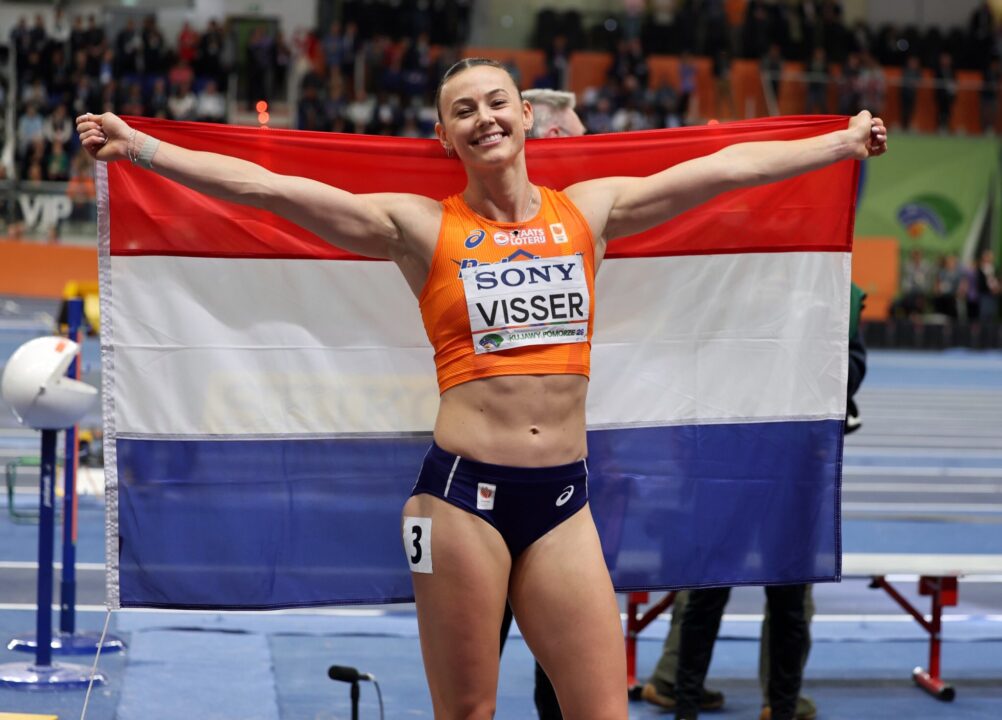
Photo: James Rhodes
The Main Goal
However, the goal for the year was clear. One race in Birmingham.
“The Europeans were the main goal always”.
The outdoor season started as well as the indoor had ended. The Rabat Diamond League provided the fastest season opener of Visser’s career (12.47) and a third-place finish. The same position followed at the Rome Diamond League before wins at the Ostrava Golden Spike and FBK Games. The latter, the biggest athletics competition in her home country, involved running 12.52 into a -1.8 headwind. Fast outings at the Paris (12.41) and Monaco (12.49) Diamond Leagues came next.
After seven races, she was fastest and unbeaten at a European level. With Birmingham getting ever closer, conversations were moving from medal contender towards pre-race favourite. Naturally, similar thoughts of what could happen were entering Nadine’s mind too.
“It was a bit weird. One moment I was really like, I shouldn’t put too much pressure on it. I had gone to the Europeans to win – or to get a medal – before, and it never happened. So, I shouldn’t think about it too much. On the other hand, I also need to feel the pressure because otherwise I will not perform. So, it was really quite weird, [working out] how to manage the emotions and everything in my head.
The weeks before I started to feel a bit nervous about it, also because I started seeing that I might be the favourite. I just wanted to do well, so much”.
Nearly Wasn’t
“Shit, we need to fix this, can I even go?”
The journey to Birmingham, and to many of the races that preceded and followed, wasn’t plain sailing. An Achilles problem midway through the season disrupted training and, for some races, warm ups. Any stress or nerves associated with talk of being the pre-race favourite were joined, if not overtaken, by this.
“It took away the stress a bit, because I was just stressed about this instead. I’d had similar before with my hamstring and sometimes that was actually a nice distraction. But I think this was a bit too much stress in the weeks before. As soon as that was ok, I could focus again”.
Fast forward to race day. The European Championships provide automatic qualification to the top athletes to the semi-finals. In the sprint hurdles this means your championships start and end on one evening, as the semis and final take place in the same session. There is little room for error.
Achilles problems put to one side, the pre-race nerves were dissipated.
“On the day itself and on the days before, I was not really feeling so nervous. But I also feel like that’s a bit of a coping mechanism. It’s kind of weird how this works. Looking back now, I think, maybe, I was even too relaxed. I’m just so happy that I did just enough”.
It might be fair to say that just enough is a bit of an understatement.
The Closest Race
The first of two races; qualification in the last of three semi-finals made to look easy. Despite a -1.3 wind, 12.69 with returning-from-injury reigning World Champion Ditaji Kambundji second in 12.94. One down, one to go.
Less than an hour and half later, the final. The penultimate race of the evening, ten barriers ahead. Twelve and a bit seconds and the race is done. To the naked eye in the Alexander Stadium, and on the TV coverage, it was impossible to call the result. The time it took for the results to come up on the big screen confirmed it was close. The photo finish was certainly needed. If it was tense for those watching in the stands or at home, it was nothing compared to waiting on the track.
“I was really just a bit blank, but also thinking; ‘oh no, what did I do? Stupid, this was unnecessary’. I just felt like it was not a great race. I didn’t want to think about the fact that I could have lost”.
Finally, the seemingly endless wait was over, the result on the screen for all to see. After two fourth and one fifth place finishes in the three previous editions, there was finally a medal, and it was gold. First: Nadine Visser 12.67; second, Pia Skrzyszowska: 12.67. European Champion, by one thousandth of a second. You can’t get any closer, but some perspective helps:
“People say [I won] on a hair, but Pia actually told me it was eleven millimetres. So, it’s quite clear!”.
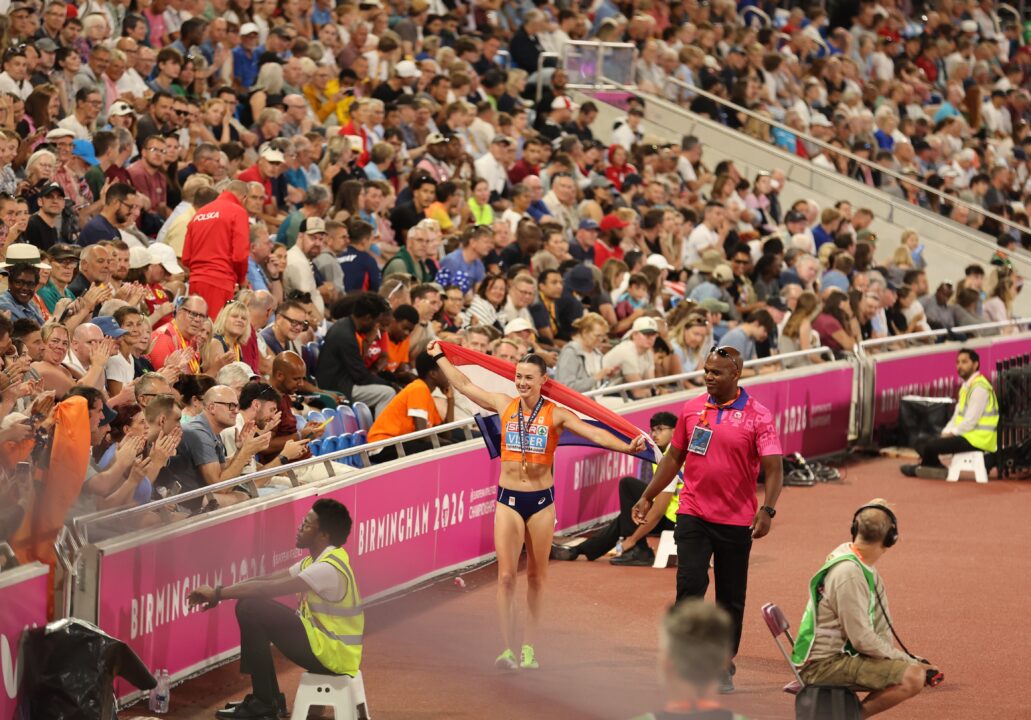
Photo: James Rhodes
The Perfectionist
There were a multitude of immediate thoughts; happiness, relief, you name it. However, ever the perfectionist, those thoughts couldn’t escape the technical aspects of the race.
“When I see it [the race], technically it doesn’t look good. I’m going everywhere, my arms! I was so happy that I did it, but also I felt – I don’t know, was it disappointment? I just felt like it could easily have been the other way around. I don’t want to think about what I would’ve felt if it was.
It’s hard for me to completely forget about this and just be happy because I won. I feel like I should have won by a bigger margin!
Nadine said she had similar thoughts two years prior, at the previous European Championships. In Rome, she won bronze with the Dutch 4x100m relay team. It was her first outdoor medal, certainly a moment to celebrate, but also with thoughts of her individual run.
“I also had this with the 4x100m, when we won a medal. My run was not great, I was not so fast. I actually couldn’t feel complete happiness about us winning a medal because I felt, ‘hmm, I should have done better’.
That’s annoying, but it’s also my personality and is a big part of why I can do what I do, I think”.
Maybe Not Full Circle
Returning to Birmingham and leaving with a maiden outdoor medal, eight years after winning a maiden indoor medal, sounds like a full circle moment. However, it wasn’t something that hadn’t necessarily crossed Nadine’s mind, and for one good reason.
“I didn’t really realise that it was the same place! Ok, maybe until when we arrived. Then I was like, oh yeah, there was snow – that was here. That feels like a lifetime ago. It was really nice, but it doesn’t really feel like full circle, because that was indoors, and I’ve won more medals since. I just wanted to do it on the 100m”.
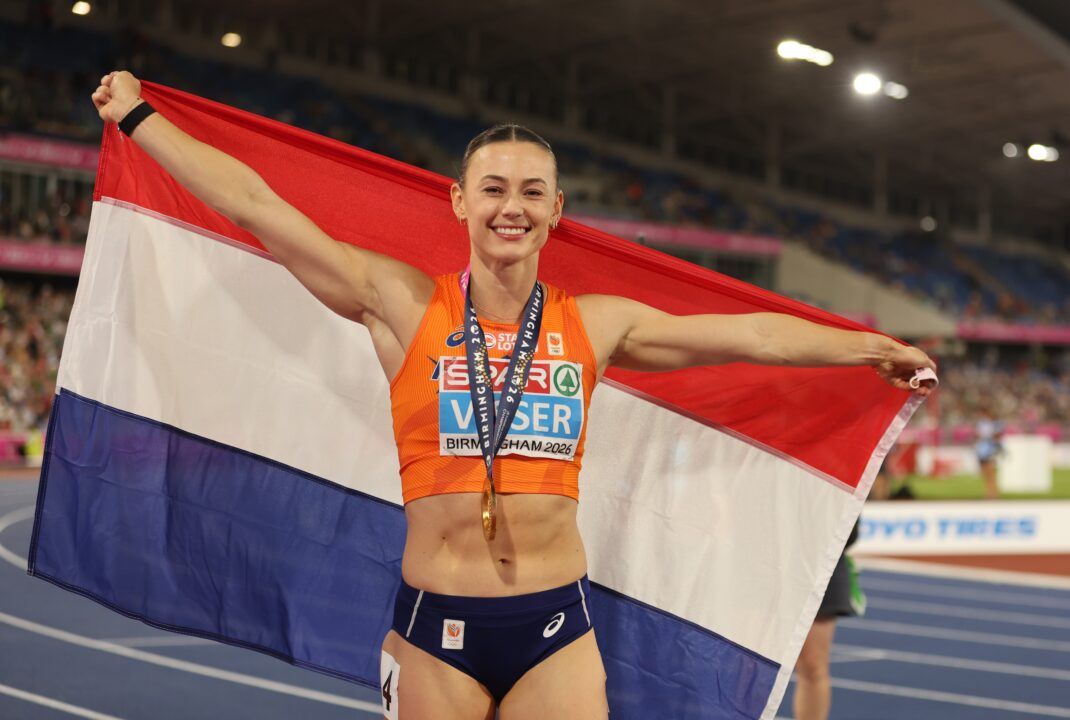
Photo: James Rhodes
Ending Well
The season did not finish in Birmingham. A flurry of Diamond League races and the inaugural World Ultimate Championship in Budapest still lay ahead. Time wise, the best of the season was still to come.
Visser’s fastest time of the year came at the Zurich Diamond League, the race where Masai Russell’s 12.09 broke the World Record. Her 12.34 was the second fastest of her career, behind only 12.28 from Silesia last year. Come the close of the season, it meant she ended the year fourth fastest in a notoriously competitive event. Ahead, only World Record holder Masai Russell, Tobi Amusan – from whom Russell took that record, and World Indoor Record holder Devynne Charlton.
A fortnight later came the World Ultimate Championship, where 12.39 saw her finish third. Notably, her final was faster than the heats, something Visser herself notes has not often been the case at championships. Ahead, only the two fastest women in history (Russell and Tobi). Behind, World Indoor Record holder Devynne Charlton – by 0.01 seconds. It is fitting a season filled with fine margins would end with one!
“After Zurich and after Budapest, I felt so much better about my races. I was able peak even after [Birmingham] and run faster times. It’s hard to peak multiple times in a season, so that was nice. In Zurich I was struggling so much and yet I was still able to run such a good race. I was like, wow! I surprised myself, I think. After that, I believed I could do well in Budapest.
I’m also really happy that I could run really well in the semi final but then way better in the final. It’s not often I could do that, I don’t know why!”.
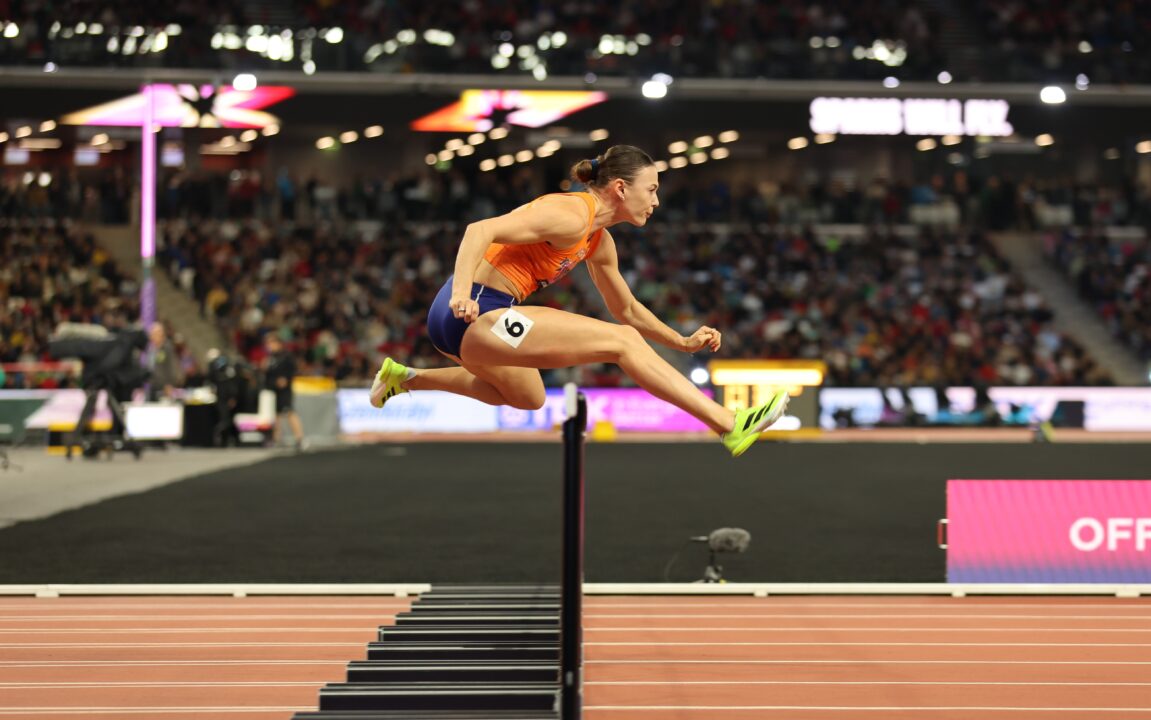
Photo: James Rhodes
No Medal? No Problem
The World Ultimate Championship was as close to a World Championships as you can get. Having no quota per country meant some finals were potentially even stronger than at a traditional championship. It made Visser’s third place finish all the more impressive. However, one of the ‘innovations’ was no medal for second and third place. She might not have left Budapest with a medal, but this was no concern.
“All the best athletes were here. I think it’s easier in a World Championships or Olympics to qualify for the final. We had only two semi-finals, only big Qs, and the World Rankings made the heats tough. People were saying, oh it’s such a shame you don’t get anything physical like a medal. I was like – I really don’t care! My mum has almost all of them”.
A season that included two podiums, the five fastest European times of the year, and undefeated in Europe was the best of Nadine’s career, so far. Perhaps the best is still to come.

Event News
Valencia Marathon Elite Fields Published

Great Britain
News Round Up: 20 November

Event News
News Round Up: 18 November

Event News
Megan Keith & Emile Cairess in Liverpool

Athlete Insights
Nadine Visser: The Closest Finish


Athlete Insights
VIDEO: Tom Bosworth interview with Mo Farah


Injury Prevention
IT Band Relief with this Yoga Routine


